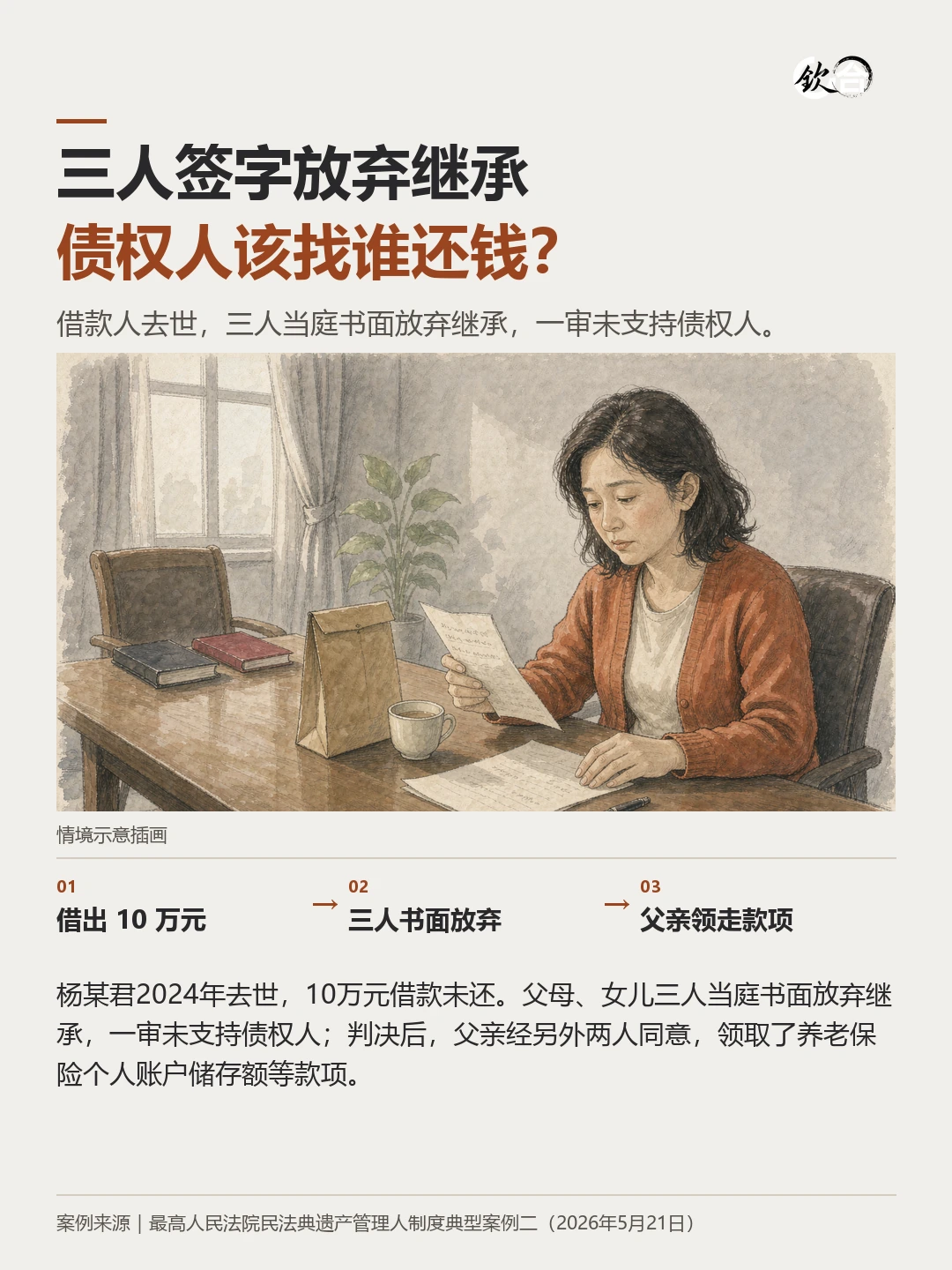
杨某君生前借了10万元,2024年去世。债权人起诉他的父母和女儿。三人在庭审中书面放弃继承,一审未支持债权人的请求。Yang borrowed RMB 100,000 and died in 2024. The creditor sued his parents and daughter. All three renounced the inheritance in writing at trial, and the first-instance court dismissed the creditor’s claim.
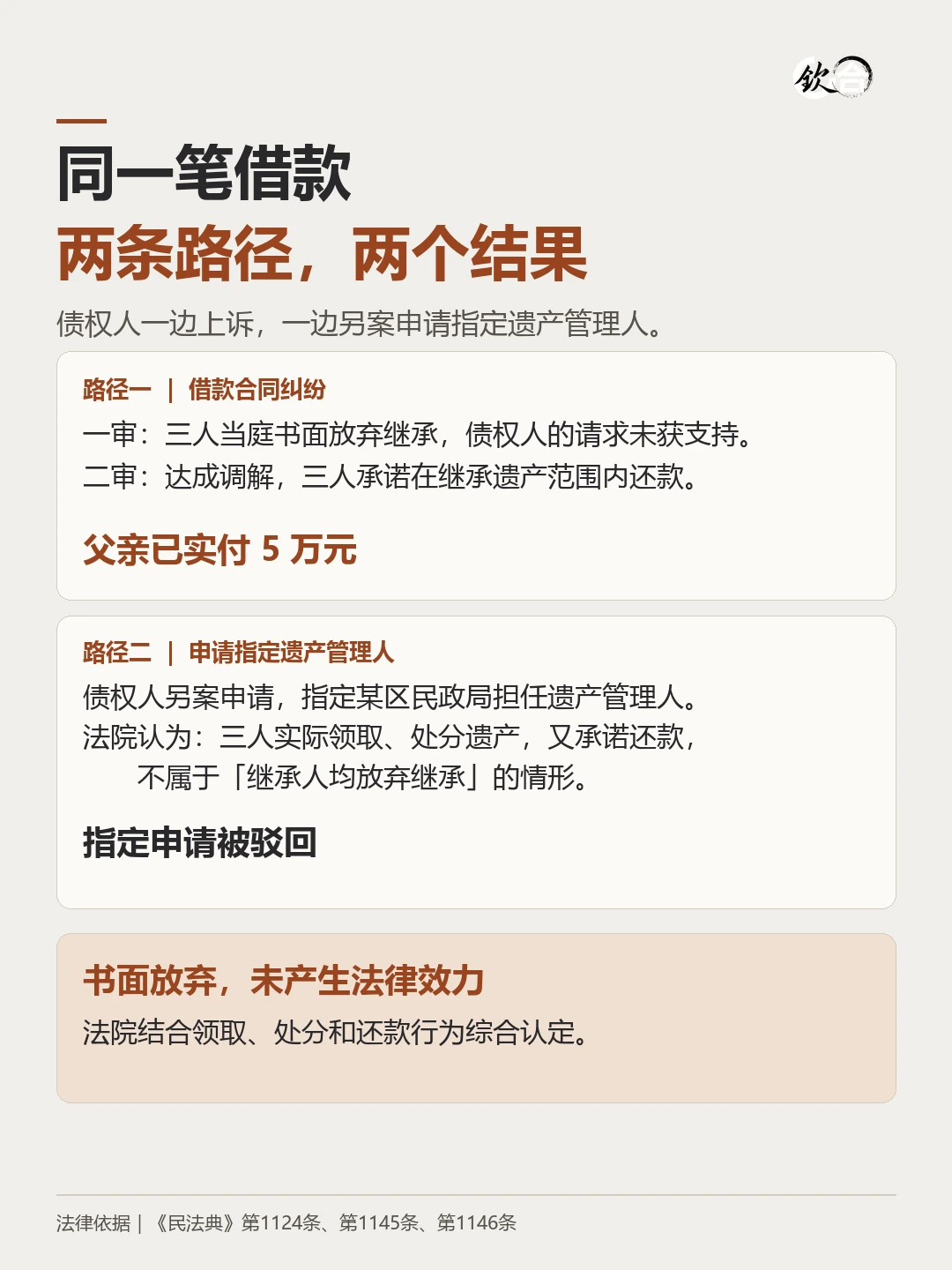
判决后,父亲经另外两人同意,领取了杨某君养老保险个人账户储存额等款项。债权人一边上诉,一边另案申请指定某区民政局担任遗产管理人。With the others’ consent, the father then collected funds including the balance in Yang’s personal pension insurance account. The creditor appealed and separately sought appointment of the district civil affairs bureau as estate administrator.
两起案件有两个结果。借款案二审达成调解,三人承诺在继承遗产范围内还款,父亲已实付5万元。指定遗产管理人案中,法院结合遗产领取、处分、偿债承诺和实际还款,认定三人的书面放弃未产生法律效力,驳回了指定民政局的申请。The debt appeal settled. The three agreed to repay within the value inherited, and the father paid RMB 50,000. In the administrator proceedings, the court considered their receipt and disposal of assets, repayment undertaking and actual payment. It held their renunciations ineffective and dismissed the application to appoint the bureau.
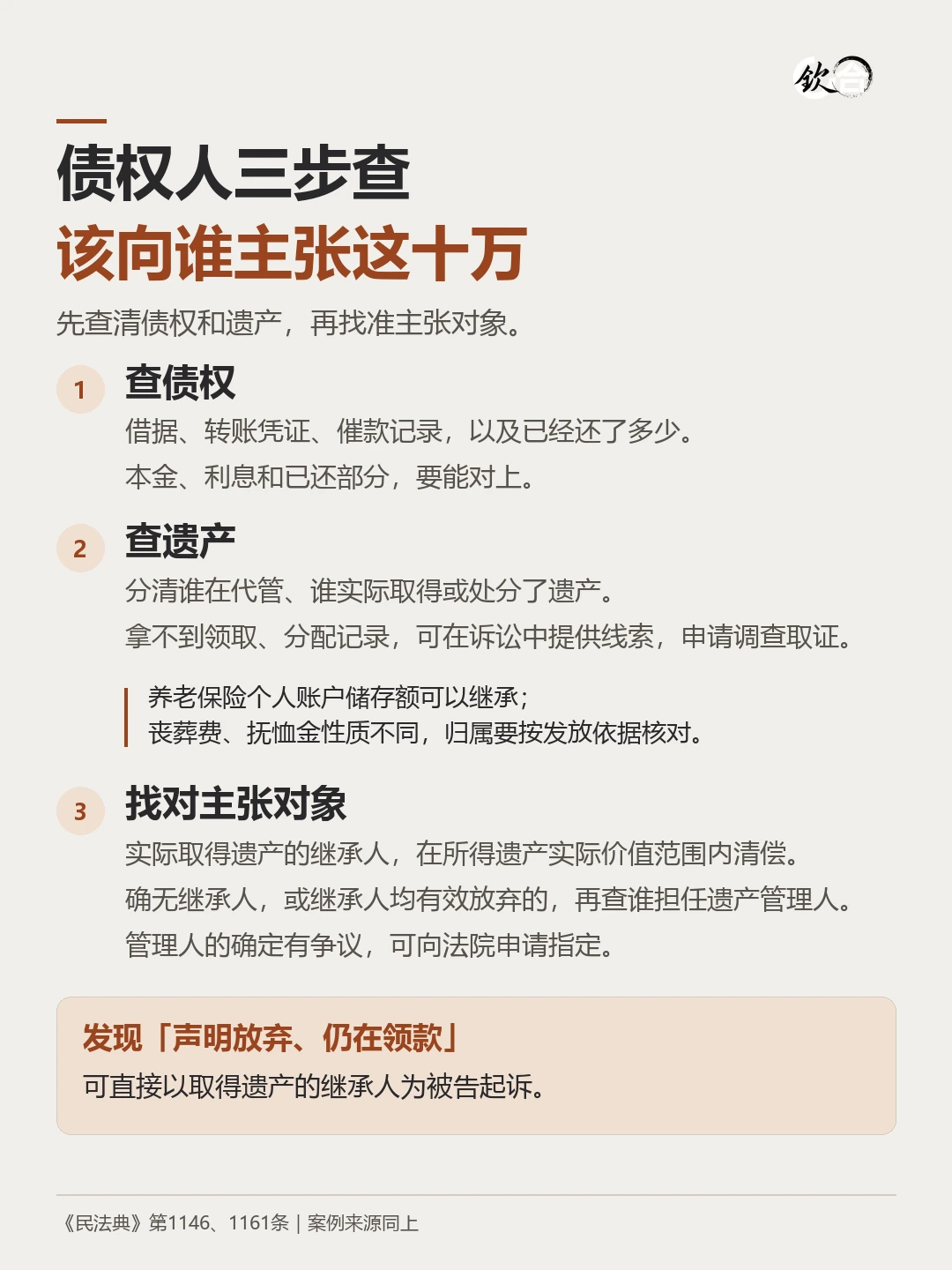
债权人可以按三步查:Three checks for creditors
一、查债权。整理借据、转账凭证、催款记录和已还金额。1. Establish the debt. Collect loan documents, transfers, demands and repayment records.
二、查遗产。区分谁在代管、谁实际取得或处分了遗产。养老金个人账户余额和丧葬费、抚恤金要分开核对性质与归属。拿不到领取、分配或处分记录,可在诉讼中提供具体线索,依法申请法院调查取证。2. Trace the estate. Distinguish custody from actual receipt or disposal. Check pension account balances separately from funeral benefits and survivors’ allowances. If records are unavailable, identify concrete leads and ask the court to obtain evidence in the proceedings.
三、找对主张对象。继承人实际取得遗产的,可向相应继承人主张清偿,原则上以其所得遗产的实际价值为限。确实没有继承人或继承人均有效放弃的,再查谁担任遗产管理人。管理人的确定有争议,债权人可以申请法院指定。3. Identify the proper respondent. An heir who actually receives assets generally answers for debts up to their actual inherited value. If there are no heirs or all validly renounce, identify the administrator. A creditor may ask the court to appoint one if the appointment is disputed.
案例来源:最高人民法院2026年5月21日发布的民法典遗产管理人制度典型案例二Source: Supreme People’s Court, second illustrative case on estate administration under the Civil Code, published 21 May 2026.
法律依据:《民法典》第1124、1145、1146及1161条。Legal basis: Civil Code, Articles 1124, 1145, 1146 and 1161.