
据媒体“IT之家”3月31日的报道,一些比亚迪车主反映,可远程查看车载摄像头影像的“千里眼”功能突然无法使用了,在比亚迪汽车App中打开此功能会提示“根据国家最新法规要求,车外影像功能正在升级,敬请期待”。According to an IT Home report dated March 31, some BYD owners found that the remote-camera function known as “Qianliyan” had suddenly stopped working. Opening it in the BYD app produced a notice saying that exterior imaging was being upgraded to meet the latest national regulatory requirements.

“千里眼”是比亚迪汽车app中给用户提供的一个功能,可以通过此功能远程查看车载摄像头,用以观察或者录像、拍摄车辆周围的环境。Qianliyan is a function in BYD's app that allows users to view onboard cameras remotely to observe, record or photograph the vehicle's surroundings.
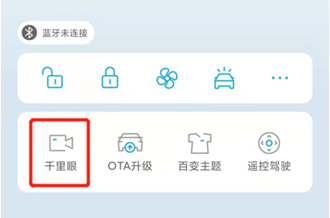
而就在3月30日,东风日产也发布公告,于3月31日关闭日产智联APP远程拍照功能、车机端DVR中照片分享和上传功能。On March 30, Dongfeng Nissan also announced that it would disable remote photography in its connected-car app and photo sharing and uploading through the in-car DVR from March 31.

通知中提醒用户,在功能关闭前及时下载云端保存的图片资料。Users were reminded to download images stored in the cloud before the functions were disabled.
到底是什么样的法规,使得两家车企不约而同地关闭了“千里眼”功能?What regulations led these two manufacturers to disable remote-camera functions at roughly the same time?
是不是所有能远程查看车载摄像头的功能都是违规的?Does every function allowing remote access to a vehicle camera violate the rules?
违反了哪一条Which provision might be involved?
2021年10月1日起施行的《汽车数据安全管理若干规定(试行)》这样规定,第八条:Article 8 of the Several Provisions on Automotive Data Security Management (for Trial Implementation), effective from October 1, 2021, states:
“汽车数据处理者处理个人信息应当取得个人同意或者符合法律、行政法规规定的其他情形。“Automotive data processors processing personal information shall obtain individual consent or meet other circumstances prescribed by laws and administrative regulations.
因保证行车安全需要,无法征得个人同意采集到车外个人信息且向车外提供的,应当进行匿名化处理,包括删除含有能够识别自然人的画面,或者对画面中的人脸信息等进行局部轮廓化处理等。”Where personal information outside a vehicle is collected without individual consent because of the need to ensure driving safety, and is provided outside the vehicle, it shall be anonymized. Measures include deleting images that can identify natural persons or obscuring the contours of facial information in those images.”
违反这一条的可能性最大,因为“千里眼”功能符合该条法规中描述的三个条件:This provision is the most likely concern because remote-camera functions fit three of the conditions it describes:
“因保证行车安全需要”“Because of the need to ensure driving safety”
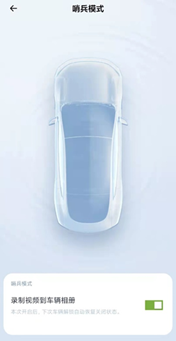
启动车辆前保证车况良好,是行车安全的一个重要方面。行车记录仪、远程摄像头、哨兵模式都是为了观察车辆环境和状况,监控偷盗、破坏等影响车况的行为而存在的,这些功能符合这一条中提到的“保证行车安全”这个目的。Ensuring a vehicle is in good condition before starting is an important aspect of driving safety. Dashcams, remote cameras and sentry mode monitor the vehicle's environment and condition, including theft, damage and other interference. Those purposes fit the provision's reference to driving safety.
“无法征得个人同意”“Without obtaining individual consent”
“千里眼”是一种远程控制功能,而且查看和拍摄的时机具有很强的随机性和偶然性,用户没办法在使用之前提前获得路人的许可,也没办法远程联系路人获得许可。“千里眼”功能也符合法规中的这个特点。Remote-camera viewing is controlled from a distance, and the timing of viewing or photography can be unpredictable. Users cannot obtain passersby's permission in advance or contact them remotely to seek consent. The function therefore also fits this condition.
“采集到车外个人信息”“Collecting personal information outside the vehicle”
用户使用“千里眼”功能有时候难免能看到车辆周围的路人,所以就有可能通过拍照或者录像功能,记录下路人的人脸。这种情况就符合这一条里提到的“采集到车外的个人信息”。Users may inevitably see people near the vehicle and may record their faces through photos or video. That falls within collecting personal information outside the vehicle as described in the provision.
为什么违反Why would it constitute a violation?
但如果仅仅因此就认为车企违规的话,以此类推,任何有记录、拍照功能的电子产品的生产商都有违规的可能。If those facts alone made the manufacturer non-compliant, the same reasoning could potentially apply to manufacturers of any electronic product capable of recording or photography.
手机拍摄街景、行车记录仪拍摄路况,都难免会记录到路人的面部,这些功能更应该禁止。Phones photographing streets and dashcams recording roads inevitably capture people's faces too. On that reasoning, such functions would be even stronger candidates for prohibition.
所以这一条法规中的一个关键附加条件,才是判断车企是否违规的关键。A crucial additional condition in the provision is therefore decisive in assessing the manufacturer's compliance.
“且向车外提供的”“And is provided outside the vehicle”
什么叫向“车外”提供,向车主提供算不算向车外?What does providing information “outside the vehicle” mean? Does providing it to the owner count?
如果把向车主提供也理解为向“车外”,那么行车记录仪就再也没有存在的必要了。哨兵、记录仪就是为了监控有没有破坏行为和事故的,这些记录的人脸是追责的重要证据,如果记录这些都需要匿名化的话,那还不如不记录。If providing information to the owner counts as providing it outside the vehicle, dashcams would lose their purpose. Sentry mode and recorders monitor damage and accidents; captured faces can be important evidence for establishing responsibility. Requiring all such material to be anonymized could make recording it pointless.
所以笔者认为这里的“车外”是不能包括车主的,否则就完全和这些功能的存在意义背道而驰。I therefore consider that “outside the vehicle” should not encompass providing images to the owner. Otherwise, the interpretation would defeat the purpose of these functions.
那么既然向车主提供拍摄画面不需要匿名化也不算违规的话,车企为什么要关闭“千里眼”功能呢?If providing images to owners need not be anonymized and is not a violation, why disable remote viewing?
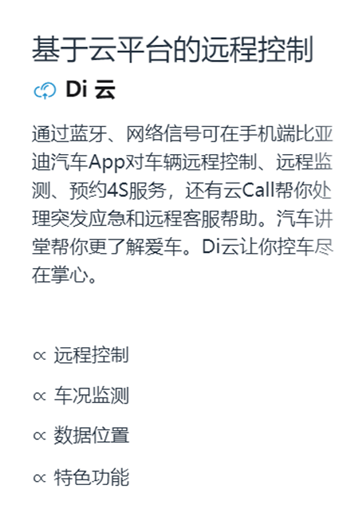
关键还是在于“向车外提供”。一个很大的可能是,一些车辆的“千里眼”功能是可以把拍摄的记录上传给车企(或者服务提供商)的,而不是简单的直接储存在本地,从而触犯了“向车外提供”这个条件。The issue remains provision outside the vehicle. One plausible explanation is that some systems upload recordings to manufacturers or service providers rather than simply storing them locally, bringing the outside-provision condition into play.
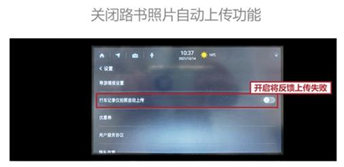
以东风日产的通知为例,可以看出车机端禁用的是上传相关的功能。Dongfeng Nissan's notice, for example, shows that the disabled in-car functions concerned uploading.
而手机端远程拍摄的照片,是要通过云端下载的,而不是直接储存在本地,因此存在一个远程拍照首先上传到云端的过程,从而触发了“向车外提供”这个“buff”。Photos taken remotely through the phone app had to be downloaded from the cloud rather than being stored directly on the device. That implies an initial cloud upload, potentially triggering the outside-provision condition.
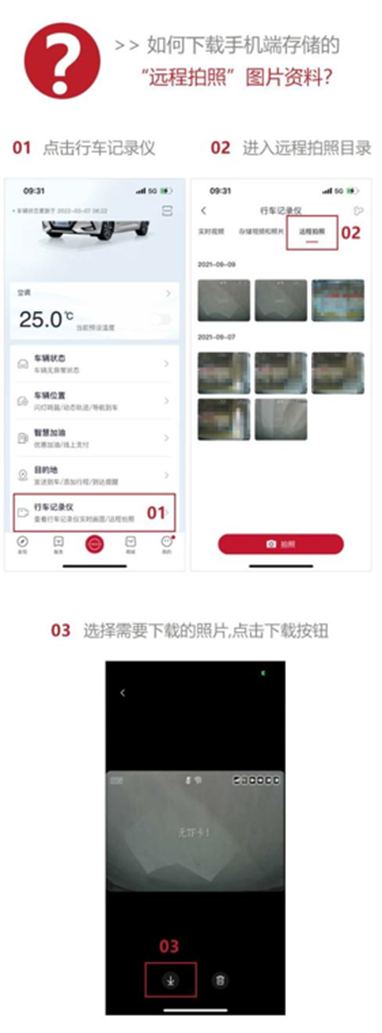
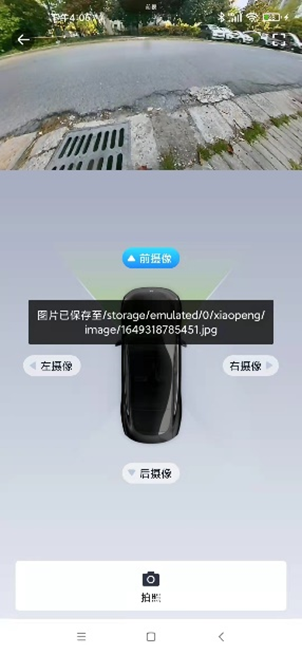
目前依然有一些车辆的远程拍照功能没有因为违规而禁用的,笔者特地尝试了一下,发现这类车辆的远程拍照的照片确实都是直接存储在本地的,如果这种功能之后还是能长期使用的话,那么就能进一步验证笔者的判断。Some vehicles still allow remote photography. I tried one and found that its remotely taken photos were indeed stored directly on the local device. If those functions remain available over time, that would provide further support for my interpretation.
本质在于对“收集”的理解The underlying issue: What collection means
无论是“千里眼”功能,还是我们日常使用手机拍摄功能,通过类比思考,可以发现此类个人信息合规的关键都在于“收集”。Comparing remote vehicle cameras with everyday phone photography shows that “collection” is central to personal-information compliance in these situations.
一件工具或者功能的使用,对信息的“收集”来说其实是有两个层面的,一个是工具的生产者或者是功能的提供者,一个是工具的使用者。工具的使用者拍摄到了路人画面储存在本地,未必意味着生产者也收集到了这个路人的人脸信息。A tool or function involves two possible collectors: its manufacturer or provider, and its user. A user photographing a passerby and saving the image locally does not necessarily mean that the manufacturer has also collected that person's facial information.
在《个保法》施行之前,有一部国家推荐行标准对“收集”有更加详细的注解。《信息安全技术个人信息安全规范》(GB/T35273-2020)对“收集”的注释2这样解释:Before the Personal Information Protection Law took effect, a recommended national standard gave a more detailed explanation. Note 2 to the definition of collection in Information Security Technology—Personal Information Security Specification (GB/T35273-2020) states:
“如果产品或服务的提供者提供工具供个人信息主体使用,提供者不对个人信息进行访问的,则不属于本标准所称的收集。例如,离线导航软件在终端获取个人信息主体位置信息后,如果不回传至软件提供者,则不属于个人信息主体位置信息的收集。”“Where a product or service provider supplies a tool for a personal-information subject to use, but does not access the personal information, this does not constitute collection under this standard. For example, if offline navigation software obtains the individual's location on a device but does not transmit it back to the software provider, that does not constitute collection of the individual's location information.”
笔者比较同意这个解释的思路,只要行车记录仪、车载摄像头、手机摄像头,拍摄到的内容只是本地储存而不上传给生产商,那么生产商就不能算是收集了个人信息,也就不存在违规。I broadly agree with that approach. If recordings from dashcams, vehicle cameras or phone cameras are stored locally without being uploaded to the manufacturer, the manufacturer should not be regarded as collecting that personal information or violating the rules on that basis.
至于工具的使用者自己是否侵害别人的个人信息,这本身可以在用户个人层面针对用户的个人行为加以规范,但这种规范不应该成为完全禁止工具的理由。刀具可以用来切菜,但不能因为可能有人用来犯罪就完全禁止使用刀具。Whether the tool's user infringes another person's personal-information rights can be regulated at the level of that individual's conduct. Such regulation should not become a reason to prohibit the tool entirely: knives can cut vegetables, and their potential criminal misuse does not justify banning them altogether.